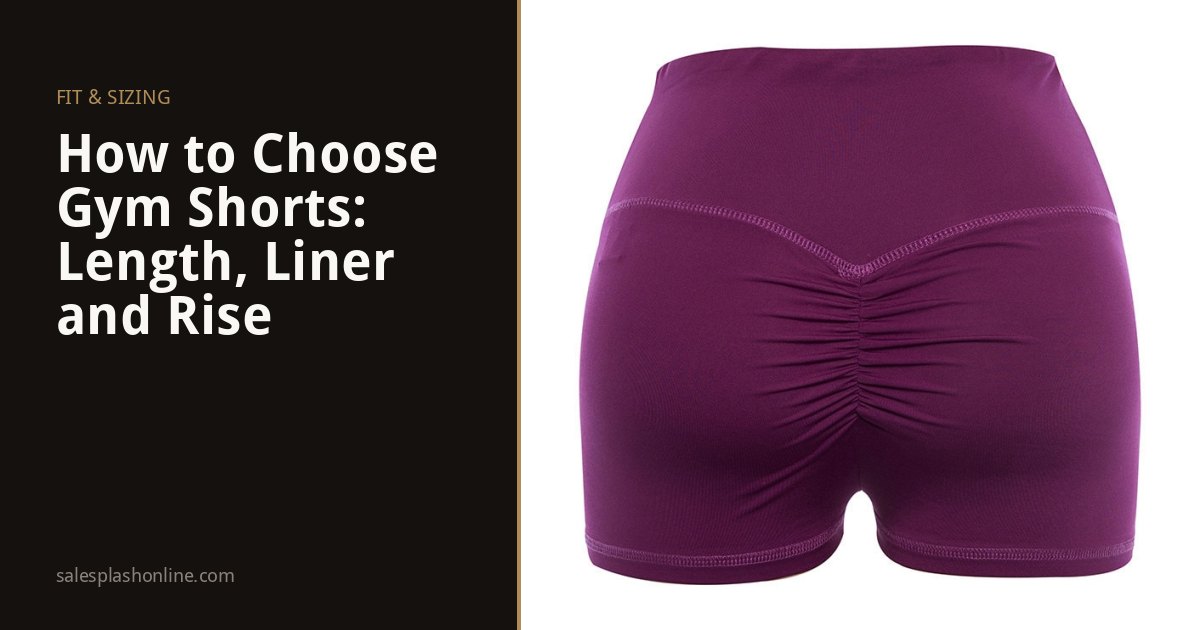
Gym shorts fail in predictable ways — riding up mid-set, chafing on runs, waistbands that fold under load. All three trace back to choices you can make at buying time. Here is how to choose by length, liner, rise, grippers and fabric, and which style suits which workout.
Length
- Biker length (mid-thigh to knee) — maximum coverage, zero ride-up, the squat-day default
- Mid-thigh — the all-rounder for gym floors and classes
- Short with liner — the running cut; the loose shell moves air while the liner stops chafe
Shorts are often described by inseam, the distance from the crotch seam to the hem. Roughly, a short inseam of about 3 inches is a running cut, around 5 inches is mid-thigh, and 7 inches or more is biker length. If you have ever had shorts ride up during lunges, go one step longer than you think you need. Browse biker shorts for the longest, most secure option.
The liner question
A 2-in-1 build — fitted inner short under a loose shell — solves the two problems loose shorts create: chafing and transparency in bright light. If you run distance, it is worth the small premium. See our running shorts.
If you prefer an unlined loose short, wear a fitted short underneath. A thin compression short works as a liner and adds support for high-impact work.
Rise
A high rise anchors at the natural waist and will not fold when you brace. This matters more in shorts than leggings because there is less fabric below to hold things in place. Our high-waist range is built on this principle.
Mid-rise shorts are cooler and suit running better, since there is less fabric over the stomach. Low-rise is rare in performance wear now, and for good reason — it moves every time you bend.
Grippers
Silicone or elastic grippers at the hem are the single feature that stops shorts riding up during lunges. If a fitted short has no grippers, expect to tug it down between sets.
Fabric
Quick-dry polyester for sweat-heavy sessions, nylon blends for softness, cotton blends only for low-intensity wear — cotton holds sweat. The same logic as our legging fabric guide.
Seamless shorts deserve a mention: they are knitted as a tube, so there are no inner-thigh seams to rub — a real advantage if chafing is your main problem.
The squat test for shorts
Fitted shorts need to pass the same opacity test as leggings. Put them on, face a bright window and squat deeply. If you can see skin tone or underwear through the fabric, they will be see-through on the gym floor. Light colours and thin knits fail most often. Our squat-proof guide covers the full check.
Which shorts for which workout
- Heavy lifting and squats: high-waist biker shorts with grippers
- HIIT and classes: mid-thigh fitted shorts, high waist
- Running: 2-in-1 running shorts with a liner and a pocket for keys
- Cycling: biker length in a dense, supportive knit
- Yoga: fitted, seamless shorts that stay put when you are upside down
- Hot weather: quick-dry fabric, mesh panels and a shorter inseam
Sizing
Our sizing runs about one size smaller than US sizing, so if you are between sizes, size up. Fitted shorts should feel snug without the waistband digging in when you sit. If the leg openings leave marks or the hem rolls up, go up a size. Measure your waist and hips against the size guide before you order.
Common questions
How do I stop gym shorts riding up?
Choose a longer inseam, look for silicone grippers at the hem, and make sure the fit is snug rather than loose. A high rise helps because the short is anchored at the waist.
How do I stop chafing on runs?
A 2-in-1 short with a fitted liner, or seamless shorts with no inner-thigh seams, solves most chafing. Moisture-wicking fabric helps too — wet cotton is the worst offender.
Shop all women’s workout shorts.