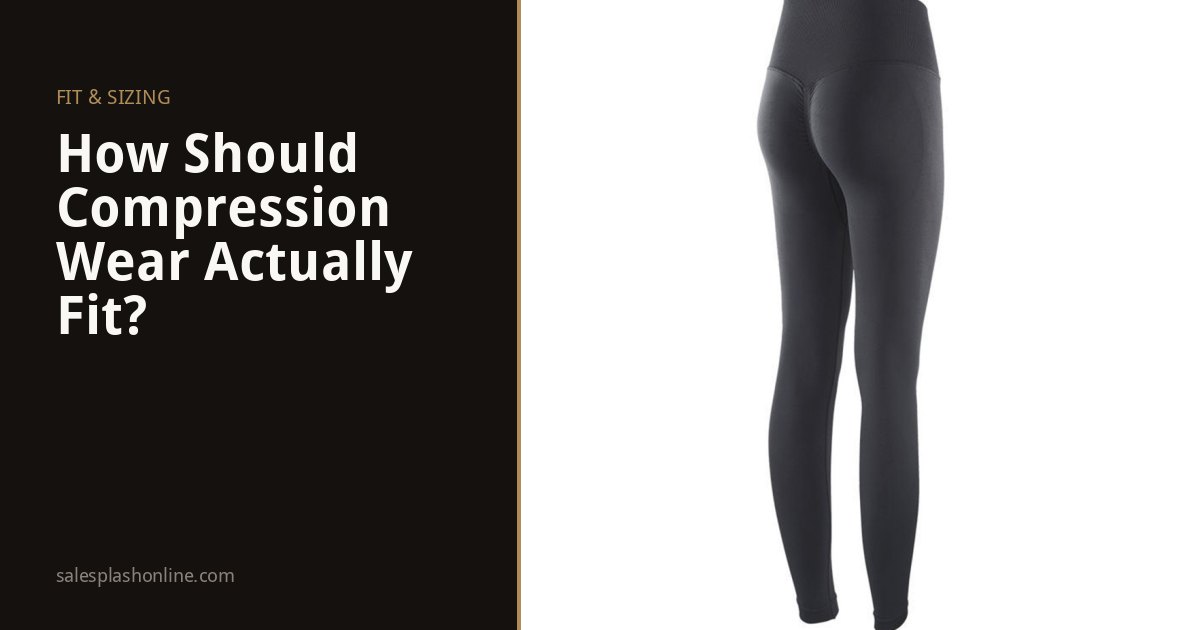
Compression is the most misunderstood fit in activewear. Too many people size down for “more compression” and end up with a garment that hurts; others size up for comfort and lose the point entirely. Here is how it should actually feel, how to check the fit at home, and what compression can and cannot do.
What compression wear does
Compression garments are knitted with a higher proportion of elastane, or a denser knit, so they apply steady pressure to the muscle. In everyday activewear the realistic benefits are practical ones: less muscle movement when you run or jump, a held-in, supported feel, and a garment that stays in place through a full range of motion. Many people also find they feel less stiff after long sessions.
What activewear compression is not is medical compression. Graduated medical stockings are prescribed at measured pressure levels for circulation problems. If you have a circulatory or vascular condition, speak to a doctor rather than relying on gym wear.
The right feeling
Firm, even pressure across the whole muscle — like a confident handshake, not a squeeze. You should be able to move through a full squat and breathe deeply without the waistband digging or the knees restricting.
Signs it is too small
- Deep red marks on the skin after wearing
- The waistband folds or rolls down — over-stretched fabric pulls it off the waist
- The fabric visibly lightens or goes sheer at full stretch
- Pins-and-needles or numbness (take it off)
Signs it is too big
- Wrinkles or bagging when standing still — compression fabric should sit smooth
- You can pull the fabric several centimetres away from the thigh
- No noticeable support during movement
A five-minute fit test at home
- Put them on properly. Roll them up and ease them on section by section. Yanking from the waistband over-stretches it and gives a false read.
- Stand still and look. The fabric should lie smooth with no wrinkles at the knee or ankle.
- Do three deep squats. The waistband should stay put and nothing should dig in behind the knee.
- Check the light. Squat facing a window or bright light. If the fabric turns see-through, it is too small or too thin.
- Wait ten minutes. Sit down and walk around. Compression that is still comfortable after ten minutes will be comfortable for an hour.
Sizing rule
Buy compression in your true measured size — never size down. The compression is engineered into the knit; the garment does not need your help. Since our sizing runs about one size smaller than US sizing, that usually means taking one size up from your usual US letter. Measure against the size guide and trust the tape, not the label. The same applies to tummy-control leggings, where sizing down for a flatter stomach usually makes the waistband roll.
If you are between sizes, choose by what you are using them for. For running and high-impact training, take the smaller of your two sizes as long as it passes the fit test. For long wear, travel or recovery, take the larger.
Compression shorts vs compression leggings
Shorts put the support on the upper thigh and hips, where most of the muscle movement happens in running and jumping, and they are cooler in summer. Leggings add support through the calf and are better for cold weather, long runs and anyone who wants coverage. Many people keep one of each. Shorts also make a good liner under a looser running short — see our gym shorts guide.
Caring for compression
The support comes entirely from the elastane, which is the first thing heat destroys. Cold wash, no fabric softener and never tumble dry. Our washing guide covers the full routine. When a pair starts feeling looser than it did new, the elastane is wearing out and the compression is going with it.
Common questions
Should compression leggings be hard to get on?
A little resistance is normal. A real struggle that leaves you out of breath usually means they are too small.
Can I sleep in compression wear?
Activewear compression is not designed for overnight wear. Take it off after training.
Browse compression leggings and compression shorts.