“Seamless” is stamped on half the activewear sold today, and it is not marketing fluff — it describes a genuinely different way of making a garment. Here is what changes, why it matters, where it falls short and how to choose a good pair.
How seamless is made
Instead of cutting panels from flat fabric and sewing them together, seamless garments are knitted as a continuous tube on circular machines. Different zones — a firmer waist, a ventilated back-knee, a ribbed cuff — are knitted directly into the fabric rather than stitched on.
“Seamless” does not always mean no seams at all. Most seamless leggings still have a small seam at the crotch or waistband where the tube is finished. What disappears are the long side and inner-leg seams that run the length of a cut-and-sew legging.
Why it feels different
- No side seams to rub during repetitive movement — the reason distance runners favour it
- Better opacity under stretch — no seam lines to gape at the seat
- Smoother under clothes and in photographs
- Zoned support without extra panels or bulk
Seamless vs cut-and-sew
Cut-and-sew leggings are made from flat fabric, cut to a pattern and sewn together. That gives designers more freedom: contrasting panels, mesh inserts, deep pockets and exact sizing. Seamless gives a softer, more body-hugging feel and fewer pressure points. Neither is better across the board — they suit different people and different workouts.
- Choose seamless for: yoga, running, all-day wear, anyone who finds seams irritating, and a smooth look under clothes.
- Choose cut-and-sew for: phone pockets, heavy lifting where you want a very firm and stable fabric, and precise sizing.
The trade-offs
Honesty matters here: seamless knits are harder to make with true pockets, and structured panelling (the kind that creates dramatic contour lines) is easier in cut-and-sew. If you want a deep phone pocket, a cut-and-sew pocket legging is still the better tool.
Sizing is the other trade-off. Because a seamless garment is knitted to shape rather than cut, the size range tends to be narrower and the stretch does more of the fitting. That suits most bodies well, but if you are between sizes, check the size guide carefully — our sizing runs about one size smaller than US sizing.
Energy seamless
A denser version of the same knit — more compression, more opacity, more structure through the waist. It is the closest seamless gets to shapewear without becoming it. If firmness around the middle is what you are after, our guide to tummy-control leggings explains what that label actually means and how to size it.
Scrunch and textured seamless
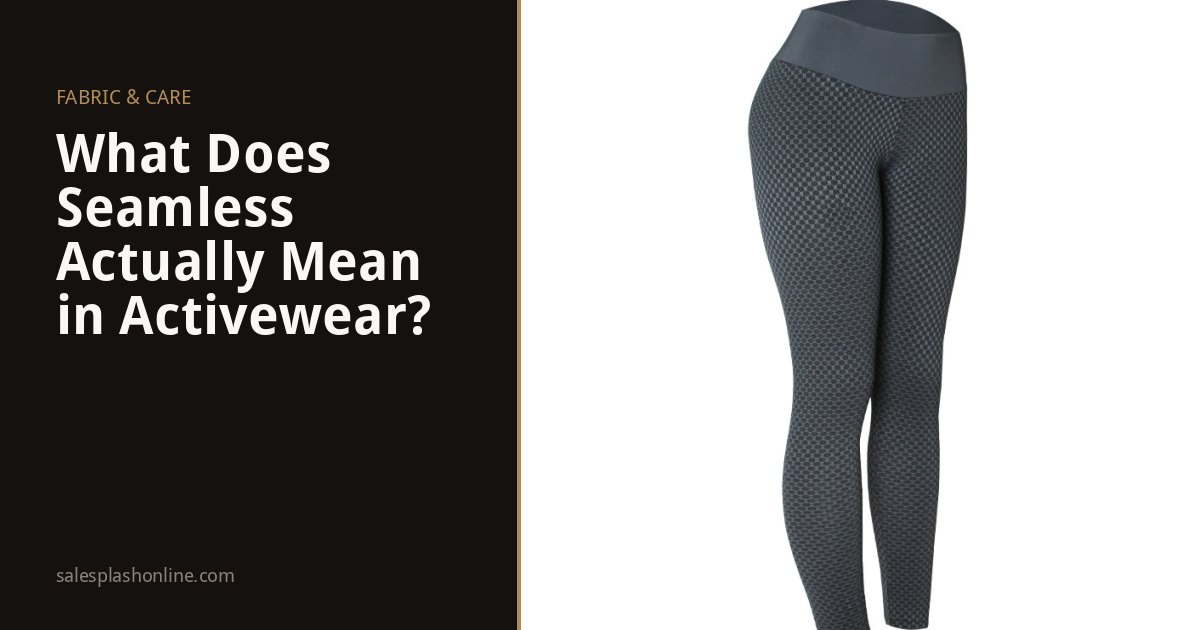
Because seamless machines can change the knit as they go, they can also add texture: ribbing, honeycomb and jacquard patterns, and the gathered centre-back seam known as scrunch or ruched. These effects are knitted in rather than sewn on, so they do not add bulk or pressure points. See our scrunch-back leggings for the most popular version. The same machines can knit colour in as well, which is how seamless prints and tie-dye effects are made; our guide to printed leggings compares that with patterns printed onto flat fabric.
What to look for in a good pair
- A dense, even knit. Hold it up to the light and stretch it. If it goes patchy or thin, it will go sheer when you squat.
- A deep, double-layer waistband that sits flat rather than rolling.
- A decent share of elastane for stretch recovery, so the knees do not bag.
- A gusset. Even seamless leggings benefit from a small panel at the crotch for freedom of movement.
Caring for seamless
The knit is continuous, so a single snag can spread. Wash seamless pieces inside-out in cold water, away from zips and Velcro, and never tumble dry. Our washing guide covers the full routine.
Browse the full seamless range and seamless shorts, or read how the fabrics compare in our fabric guide.