Cold-weather running punishes overdressing more than underdressing. You warm up within ten minutes, and anything that was comfortable standing at the door becomes too hot by the first mile — at which point you are sweating into fabric that then chills you every time you stop. Getting it right is mostly about accepting that the first ten minutes are supposed to feel unpleasant.
The rule that governs everything
Dress for about 10°C warmer than the actual temperature. If it is 4°C outside, dress as though it were around 14°C. You should feel distinctly cold when you step out. If you feel comfortable on the doorstep, you are overdressed and you will know it within a mile.
This is counterintuitive and it is the single most useful thing to know. Almost every cold-running mistake is a variation on being too warm at the start.
Why sweat is the actual enemy
Cold air on dry skin is manageable. Cold air on wet fabric is not, because water conducts heat away from the body far faster than air does. A damp layer against the skin will chill you aggressively the moment you slow down, stop at a crossing, or turn into a headwind.
This is why cotton is genuinely dangerous in cold weather rather than merely suboptimal. Cotton absorbs and holds moisture, so it stays wet, and it stays cold. Hydrophobic synthetics — polyester and nylon — hold very little water in the fibre itself and move it outward instead. For winter running this is not a preference, it is the whole design requirement. The fabric guide covers how the fibres differ.
What to wear on your legs, by temperature
Legs generate a great deal of heat and need far less covering than most people assume.
- Above 10°C — standard unlined leggings, or shorts if you run warm. No special provision needed.
- 4°C to 10°C — standard full-length leggings in a synthetic knit. Most people need nothing more than this, and reaching for a thermal pair here is the classic overdressing error.
- 0°C to 4°C — a heavier or lightly brushed legging. This is where lining starts to earn its place, particularly if it is windy.
- Below 0°C — fleece-lined or thermal, ideally with some wind resistance across the front of the thigh.
Note that a fleece lining is warm by design and slow to dry, which makes it excellent for walking and commuting and less good for a hard run where you will sweat into it. Our piece on fleece linings covers the trade-off between warmth, stretch and breathability in more detail.
Wind matters more than temperature
Wind chill is the reason a 5°C run can feel colder than a still day at freezing, and it hits the front of the thighs hardest because that is the surface moving into the airflow.
A knit does nothing against wind — air passes straight through it. A coated or tightly woven face fabric does, which is why a thin windproof layer over a standard legging outperforms a much thicker knit on a windy day. If you only run in one direction into the wind and back, plan the route so the outbound leg faces into it, while you are still dry.
The extremities are where you actually lose heat
Legs and torso mostly look after themselves once you are moving. Hands, ears and feet do not, and they are cheap to fix.
- Gloves. Thin ones. Hands warm up substantially after a mile and thick gloves become something to carry.
- A headband or thin hat. Ears are the most common source of genuine discomfort on a cold run.
- Proper socks. Synthetic or wool, never cotton, and not thick enough to change the fit of your shoes.
Getting these three right lets you wear noticeably less on your body, which is the goal.
Layering the top half
Two layers handles almost all conditions: a close-fitting synthetic base against the skin to move moisture, and a wind-resistant outer that can be unzipped to regulate temperature. A third insulating layer is only necessary well below freezing, and it is usually the thing people are carrying by mile three.
Choose an outer you can vent without stopping. The ability to open a zip six inches while running is worth more than any amount of technical fabric.
Visibility, since you will be running in the dark
Cold-weather running largely happens at either end of the day. Reflective detail on your legs is more effective than on your torso, because moving limbs are what drivers actually register — the up-and-down motion reads as human in a way a static reflective panel does not. If your kit has no reflective detail, a pair of reflective ankle bands is a few pounds and does more than an expensive jacket.
Afterwards, which is when most people get cold
The dangerous moment is not the run, it is the twenty minutes after it. You stop generating heat, you are damp, and your body temperature drops quickly.
- Change out of damp kit as soon as you get in, rather than sitting down in it first.
- If you are driving somewhere to run, take a dry top for the journey home.
- Do not leave damp synthetic kit in a bag — a few hours is enough to set odour permanently into the fibres.
- Rinse in cold water if you cannot wash promptly. Sweat salts degrade elastane faster than plain water does.
The washing guide covers the rest.
What we stock for cold weather
- Fleece-Lined Winter Leggings — velvet-fleece lined, high waist, S to XXL.
- Fleece-Lined High-Waist Leggings — the same construction through S to 3XL.
- Thermal Culotte Leggings — fleece-lined with a culotte overlay, 2XL to 4XL.
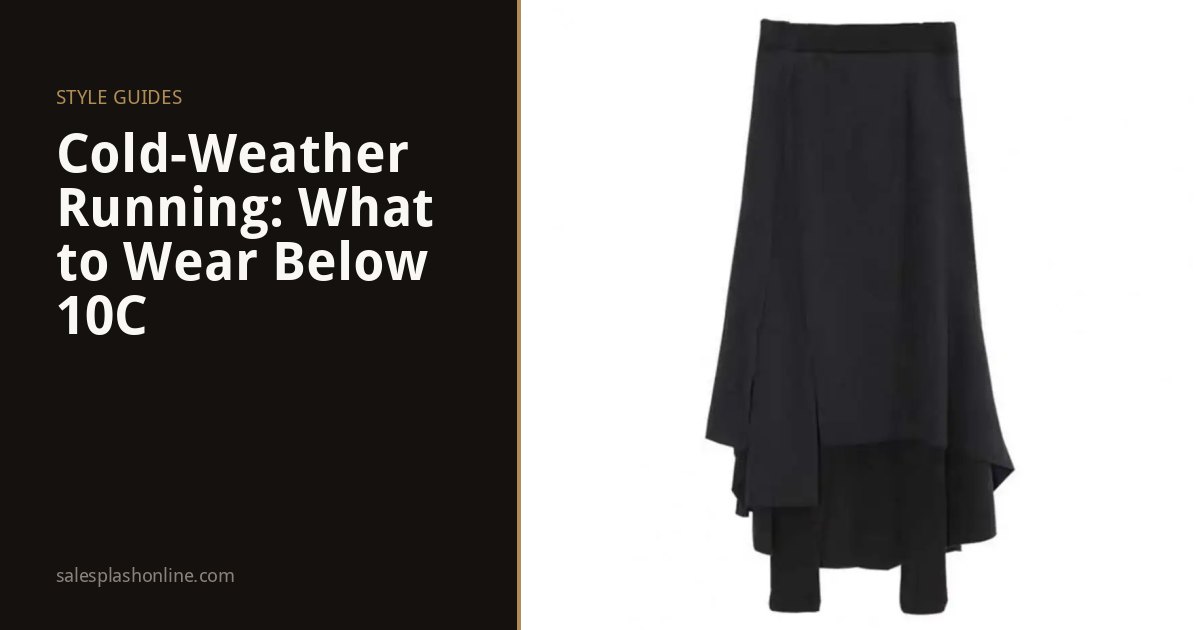
- Fleece-Lined Skirted Leggings — offered with and without lining, M to 4XL.
- Faux Leather Leggings — not a running garment, but the coated face genuinely blocks wind, which makes them the warmest thing here for walking and commuting. More on why.
- Seamless High-Waist Running Leggings and Two-Tone Seamless Running Tights — unlined synthetic knits for the 4°C to 10°C range, which is most winter running.
Browse the full leggings range.